

The use of Raman spectroscopy makes it possible to create a comprehensive profile of a sample with high information content in only a very short time. For example, microorganisms provide a typical spectroscopic fingerprint depending on the development environment, metabolism, temperature or age. However, the data sets obtained are very complex and, depending on the conditions, the spectroscopic fingerprint varies only marginally.
Efficient Raman data analysis
However, the data sets obtained are very complex and depending on the conditions, the spectroscopic fingerprint varies only marginally.
By combining the analytical process with artificial intelligence (AI), the spectral data can nevertheless be made useful for effective and rapid diagnosis. The use of AI allows enormous amounts of data to be handled in just a short time, enabling, for example, microorganisms or chemical components within process flows to be precisely identified and classified, and concentration and behavioural analysis to be carried out.
Spectroscopic databases
The basis for this is formed by spectroscopic databases in which the spectral fingerprints of individual microorganisms with different characteristics or chemical components are stored. These are processed by specific machine-learning algorithms and compared with the measurement data obtained. This machine-learning mechanism is not limited to diagnostics, but is transferable to many other areas where microbes play an important role, such as in drug production, the food industry or agriculture, and can also be used for process analysis in the chemical sector.
Application spectrum of AI in data analysis
Furthermore, AI is not only useful for spectroscopic data. For example, visual data such as microscope images can also be processed and a database created based on them to analyse and categorise images and shapes. Due to a constant increase in information in the database systems, even unknown bacteria and microbes can be identified in this way.
Biophotonics Diagnostics offers you AI-supported database services for the fast, reliable, stable and non-invasive identification of bacteria and other microorganisms in medical diagnostics, environmental technology, water management, the pharmaceutical industry, agriculture, the food industry and chemical process control.
Raman spectroscopy is a photonic examination method that is widely used in chemical and biological analysis for the identification and quantification of a wide variety of substances, substance mixtures, cells and microorganisms.
Basics and measuring principle
Similar to infrared spectroscopy, information acquisition is based on the interaction of electromagnetic radiation with the sample under investigation. In the case of Raman spectroscopy, the sample is excited by monochromatic light from a laser source, which leads to elastic and inelastic scattering processes in the sample, whereby the inelastic scattering contains important information on substance- and molecule-specific vibrations. This information can be detected in the form of wavelength changes of the reflected light and allows conclusions to be drawn about the material composition of a sample as well as statements about crystallinity, doping, pressure and temperature dependence.
In biophotonics in particular, Raman spectroscopy offers enormous potential, as it allows extensive conclusions to be drawn about the sample composition and information to be obtained about the spectral fingerprint of individual components within a very short time with only a minimal amount of sample and little effort for sample preparation....
Advantages for bioprocess analysis
For example, species such as bacteria, yeasts and somatic cells can be easily identified. Furthermore, due to its non-destructive nature, Raman spectroscopy enables non-invasive tracking of biological process sequences, such as metabolic processes, and subsequent verification of the results by other analytical methods on the same sample.
Raman spectroscopy

Drinking water & waste water
Drinking water & waste water
Micro Raman spectroscopy in combination with chemometric methods allows to quickly and easily identify bacteria and other microorganisms independent of their strain, different growth conditions and cultivation. Analysis with Raman spectroscopy offers you numerous application possibilities and advantages, e.g.:

Chemical process analysis
Chemical process analysis
AI-based process analytics are increasingly providing new insights into processes that must ensure high quality assurance requirements while reducing costs. These require special analysis techniques that must both completely and accurately map the process and offer timely evaluation of the data. Raman spectroscopy as a versatile analysis technique, offers enormous potential for this.
The advantages of Raman spectroscopy in chemical process analysis:
- High specificity
- Analyses of organic and inorganic materials
- Applicable to solids, liquids and gases
- Non-invasive and non-destructive
- Short measurement times
- Low effort for sample preparation
- Process monitoring at the highest level
- Possibility to measure from aqueous media
We would be happy to support you in developing solution strategies for your individual problems and discuss ideas with you on how Raman spectroscopy, linked with AI technology, can also be usefully applied for you. We are looking forward to your inquiry:
Bioprocess analytics
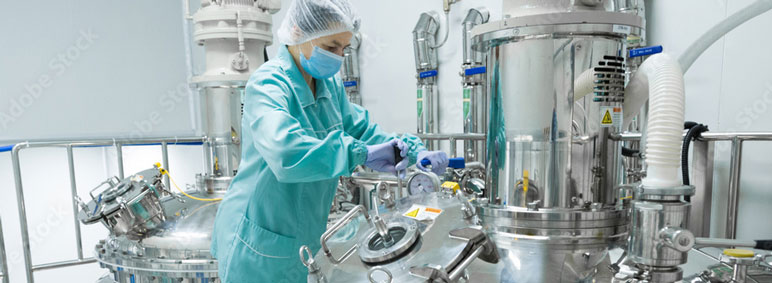
Bioprocess analytics
For the production of life-saving, life-sustaining and life-enhancing drugs, high precision and efficiency is essential to manufacture them in high quality and at low cost. Raman spectroscopy in combination with machine-learning systems offers you the following advantages in this regard:

Food industry
Food industry
Quality awareness for foodstuffs is becoming increasingly important in our society. In order to meet this and to analyse and produce your products at the highest level of quality, Raman spectroscopy in combination with chemometric methods offers you the following advantages:

Agriculture & Environment
Agriculture & Environment
Soils and water bodies are complex ecosystems that are sometimes severely out of their ecological balance due to intensive management. Raman spectroscopy in combination with machine-learning algorithms can contribute to the restoration of sensitive ecosystems, e.g. through the use of the "Raman" method:
Medical diagnostics
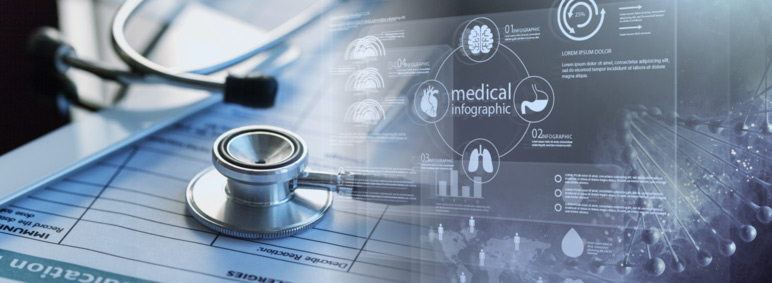
Medical diagnostics
The most important criterion for medical diagnostics is an accurate and reliable method for determining the cause of the disease in order to be able to make an optimal therapy decision. Here, Raman spectroscopy in combination with machine-learning systems offers you the following advantages:
